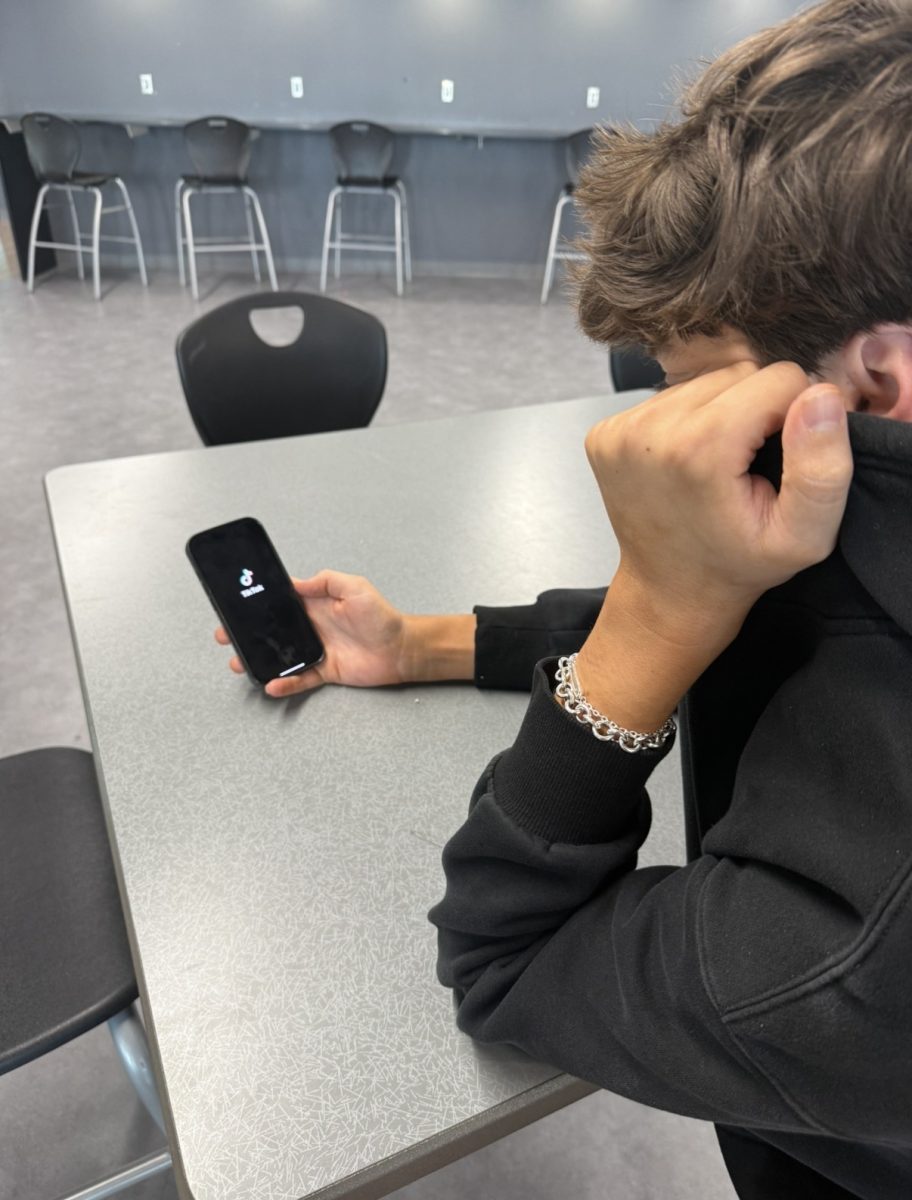



Apps track how long users watch a video, what types of reels they send their friends, and what videos they doom scroll through at 1 in the morning. With one like on a TikTok, a “For You Page” could be flooded with videos over the same topic or the same sound.
Each social media platform builds a perfectly curated stream for individual viewers. Their preferences are constantly being recorded. Every behavior from a user is tracked, whether it is rewatching a certain part of a clip, liking a video, or leaving a comment, anything can change a feed instantly.
“I’ll like one video and then it’s all I see on my feed for two days,” junior Emry Grant said.
As the algorithm learns viewing patterns, it delivers content to fit certain interests and viewpoints. It decides what an user will see, influencing them on what to think and believe. It defines who they are and what they like.
Social media becomes a user’s vision board. It creates an environment that repeats itself; it gives suggestions over what aesthetics to follow, what clothes to buy, and what influencers to like. A feed not only reflects personality, it also shapes it. A social media presence can easily turn into someone’s identity.
“I think it depends on what videos they’re watching, who they follow, and what their friends post that influences them,” English teacher Shaylie Hollst said.
The algorithm pushes certain subjects super hard at one time. Some focus on videos over the same topic, another’s goal is to promote brands, and some even aim to change the users opinion over a certain topic.
The posts a user engages with is a reflection of what is going on in their mind. It affects how someone sees themselves and others. Platforms are designed to capture users’ attention and find content they are most likely to engage with.
“I’m influenced by what everyone else has and I feel like I need to follow that trend too,” junior Sydney Kruse said.
Interests are amplified the more a user is on social media. It not only defines what a person thinks and feels, but it sways what choices they make. It could be spending money on Stanley cups and Dyson Airwraps, or even the way that people talk to each other.
“A lot of the slang that [students] use, how they talk to each other, and the way they communicate is probably the biggest thing I see,” Hollst said.
What goes viral on social media is more often the negative topics: celebrity breakups, disagreements over political views, and criticisms over brands spread faster than facts. Opinions are formed without having the full story, and viewers are persuaded towards one side with what each platform wants them to believe.
Social media prioritizes what is shareable and is easy to repost. Many issues are summarized in a 30 second video or a two sentence caption. This makes people care more about how something looks online instead of what it actually is like. An issue can be trending, and then completely disappear off of a feed.
Social media is teenagers’ main form of communication. The way media feeds are curated shapes how they present themselves. The more that users compare themselves, the more they feel like what they’re doing isn’t enough to keep up with everyone else. People tend to follow what they think others are going to do, and with the presence of social media this is even more frequent.
“If everyone else has something, then I’m going to want it too,” Kruse said. “And it’s going to make me want to spend my money on it even if I probably don’t need it.”
Viewers are scared to miss out; if everyone else is participating in something they will want to as well. Users present the versions of themselves that they want people to see, and hide what they don’t.
What people see on their feeds is constantly changing, and it follows them into their everyday lives.
Social media proves how susceptible the public is to influence. The speed that trends become popular shows how easily users’ behaviors can be changed without them noticing.