
With the ongoing conflict in Iran, national security and safety costs have been on the rise. With President Donald Trump’s proposed economic plan for 2027, he plans to increase defense spending by 44%, wanting a total of 1.5 trillion for the cause. To fund his pursuits, President Trump plans to cut federal funding for several organizations, one of which being the National Endowment of the Arts, which provides grants for arts groups, preserves culture and heritage sites, and most importantly, funding for K-12 arts education in schools across all 50 states.
To cut funding for an organization that takes up just 0.003% of the federal budget, these actions don’t affect just a few artists, but the entire education system. Without the arts, students don’t miss out on “extra” activities, they lack the environment that encourages creative thinking, innovation, passion, and originality.
With the implementation of the budget taking effect on Oct. 1 of this year, schools that rely on grants from the government to expand their instrumental or choral programs or to support financially struggling students are under serious threat.
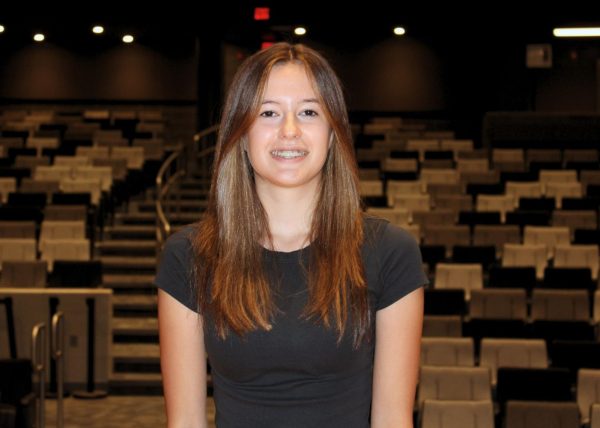
Senior Evan Olijnek, a strong critic of the current budget cuts, plans to attend South Dakota State University this fall and major in Music Education.
“Instruments are expensive as well, and they break so, so often,” Olijnek said. “Repairs cost money, and without money, because of cuts, we can’t do our jobs properly.”
Despite the benefits, programs will undoubtedly begin to struggle as soon as the cuts are enacted. Without funding, which 34% of poverty-stricken neighborhoods rely on, schools must rely on parents and school districts to fill the needs of students.
“This area of town is a more well-off area of town, whereas the district I was previously in was toeing the line between well-off and Title I (a school that receives federal funding to support low-income students),” instrumental music director Ben Petrmichl said. “There is just not a lot of funding and support.”
Not only are the students facing disparity from this budget, but educators that are already in the profession or those who are considering music education as a career choice are facing concerns over the future of the arts in schools.
“When I was going on college visits, I came in going, ‘Okay, I might want to go into Computer Science or I might want to be a Music Education major,’” said Olijnek. “Eventually, I settled on Music Education, but Computer Science is still in the back of my mind in case this doesn’t work out.”
Viewing the arts as just another expendable writeoff will be detrimental to students around the country. Ignoring the impact they bring is another aspect this plan throws to the side. It’s a fundamentally flawed idea to believe academic enrichment can only occur when students solely study core subjects like science and math when the arts can introduce another level of development.
Studies from the NEA, show the beneficial effects the arts can bring to high school students. Impressive test scores in every core subject, better GPAs, and a higher likelihood of achieving a high school diploma were all associated with the accomplishments of fine arts students.
It’s undeniable what the arts bring to a student, and moreso, what it can bring to an education.
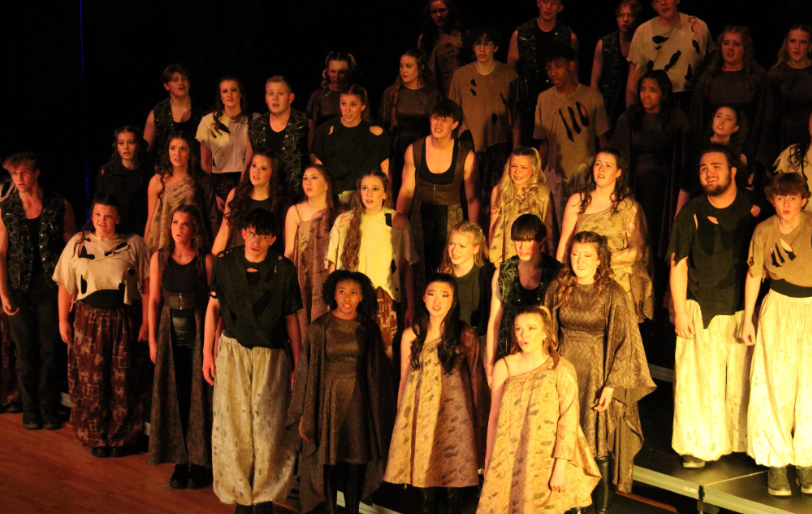
“I used to think I’d never continue past middle school with band,” sophomore Mary Koske, who is involved in several honors and AP courses, said. “Now I’m practicing everyday, almost all of my friends are in band, and I realized there was no way I could ever leave this program.”
The social aspect of this plan is the most undersung, but the most important part that lawmakers seem to ignore. The arts bring higher scores and better grades, but above all else, they bring a sense of community.
“‘Show up, watch, and broaden your horizons,’ that’s what I would say to them (lawmakers),” Petrmichl said. “The arts aren’t something that you just show up and do, they allow you to grow as a person and carry life lessons that apply to everyday life, jobs, and creating their futures.”