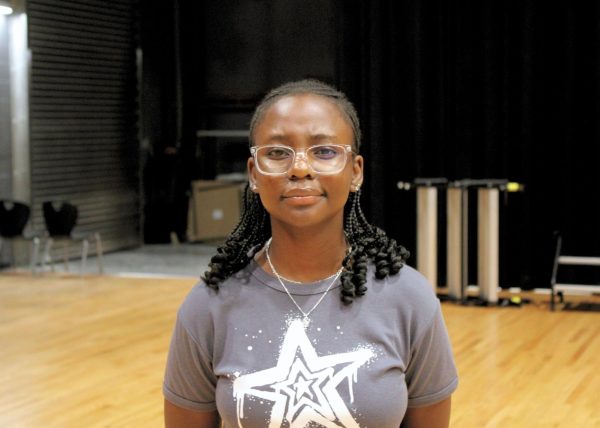


I have a bittersweet relationship with change. Everyone does, don’t they? Five years ago I experienced the complete overhaul of my life moving from Nairobi, Kenya to Omaha, NE. Looking back, the process was benign on the surface. The emotional and relational impact of the move has fundamentally changed me as a person. I doubt I would have had the same sensibilities, beliefs, and values I have now if I remained in my home country.
For some context, Nairobi is the capital city of Kenya, an East African country. Kenya declared independence from the British Empire in 1963 and became a democratic republic in 1964. There are two national languages: English (UK) and Swahili–the stuff in The Lion King. Kenya currently has the sixth largest economy in Africa out of 50 countries. Kenya’s political system takes after the American political system with a 3 branch government, including a supreme court, presidential office, and a law-making body, parliament. There are 47 counties, which could be considered states, each with its own government with a governor at the top.
It’s interesting, however, to think of myself as just a Kenyan. Before, I would have been identified by my tribe or sub-tribe, Luhya or Maragoli. Being that Kenya is a majority black country, there is no reason to have a hierarchy system based on race the way the US does. Additionally, discrimination is based heavily on ethnicity: what tribe a person belongs to, its customs and traditions, and its historical relationships with other tribes. Tribalism today looks like withholding opportunities, verbal heckling, or an inconspicuous look. It used to be bloody; 2008 post-election violence saw people slaughtering their neighbors on account of widespread political unrest and dissatisfaction. One candidate, Mwai Kibaki, was backed by certain tribes and another candidate by others. When things didn’t pan out the way some groups wanted them to, an already contentious election cycle became deadly. We’ve moved on from the violence since then.
Schooling here versus there is like night and day. Public schools in the United States, specifically in Omaha, are on par with private schools in Kenya. This is because of a few factors, one of which is colonialism. During British rule, schools that were 100% for Kenyans were either severely underfunded or not funded at all. Once the British left, a cohesive, functional public school system was never established, save for a few standards here and there. Political corruption in the form of siphoning funds has left schools in some areas in the same state as when the British were around. The Ministry of Education did establish the 8-4-4 system: eight years in classes one through eight, four years in high school, and four years in a college or university. That was the system I grew up under, but after the COVID-19 pandemic, the ministry changed it to something similar to the US. The school year was different as well; Classes started in January, when it was warm, and ended in October, when it was warm again. There were three terms, each lasting four grueling months. November and December was our ‘summer’ holiday, but we also got 2 weeks off in April and August along with national holidays.
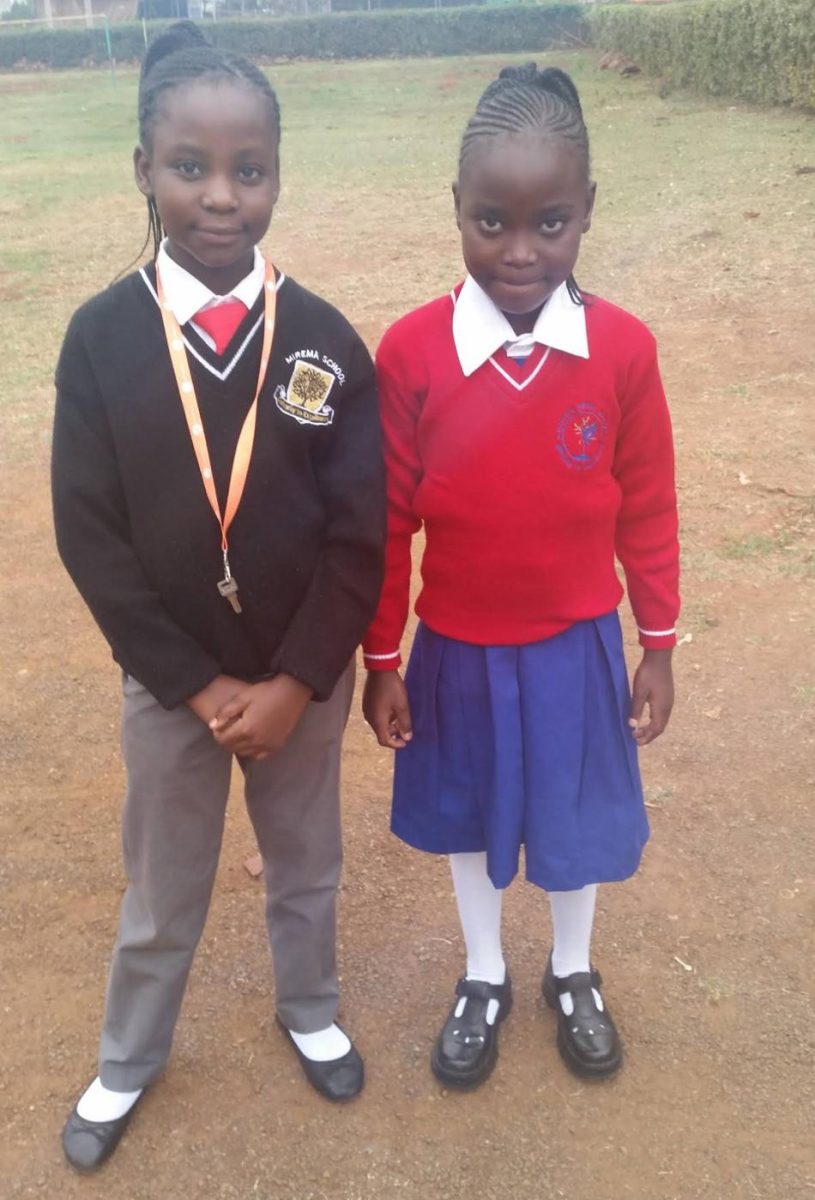
I attended private schools: East End Junior Academy for kindergarten and Mirema School from first grade to seventh grade, until my family moved. Grades there are named a little differently. Instead of saying ‘first grade, second grade, and third grade’ it would be ‘class one, class two, and class three.’ Pre-school and kindergarten included baby class, nursery, and pre-unit then off to class one. Because it was a private school, students were mandated to wear their uniforms, and most, if not all, schools were like this (except the international schools, but that’s a whole ‘nother can of worms…). Girls in classes one through three were supposed to wear dresses because that was the ‘lower school,’ and girls in classes four through eight had the option to wear a skirt or trousers (pants) with a blouse, the ‘upper school’. I detested the years when I had to wear a dress.
There are subtle and not-so subtle differences between these two nations. Once we moved in 2021, I was isolated. I didn’t know anyone, my sister was too young to confide in, my mom was dealing with her own feelings of isolation, and my step-dad was ne’er eager to assist either of us. It was a very difficult adjustment period for my mother and I especially. Although we willingly left our home country in the name of a unified family unit, it was still difficult to come to terms with the fact that we would no longer be tethered to that place, and that it would move on without us whether or not we moved on.
I was severely depressed, and I didn’t go out much. I was afraid. In retrospect, I should have been braver. The community would have accepted me as I was. But, the history of the United States, as tumultuous as it was (and still is), held me back. 2021 came after widespread Black Lives Matter protests, to which the whole world bore witness. The perception of Black Americans, one of loud, violent, under-served and undeserving, was also one that the world was privy to. Upon moving to the US, I quickly realized that the stereotypes and assumptions about Black people that I read about in textbooks and online would be ones that I would have to contend with day after day. The nature of race here as well as the weight of it, is different and unexplainable in a way; I am constantly grappling with the hurdles, systemic or not, that I have had to overcome time and again.
Aside from the day to day instances like being followed around in stores, people crossing the street when they see me, asking if I’m in the right place, peers touching my hair without permission, or being told I’m attractive or intelligent “for a black girl,” and so on and so forth… My favorite story to tell about discrimination is, one day, on a cloudy spring day in April 2023, my mom and I went shopping at our local Walmart, the supermarket of kings. My mom said to me in Swahili, “Go get your sister’s cereal and whatever else is on your half of the list,” and I answered, in Swahili, “Yes, mom.” A very normal and common exchange, especially at Walmart. There was a lady who was listening in on our conversation, and, for the purpose of this anecdote, she was white. The lady followed me to the cereal aisle; I thought nothing of it. As I leaned over to look at the specific type my sister liked, she cleared her throat in order to get my attention. I paid her no mind the first few seconds because, again, normal Walmart occurrence. After a beat or two, I stood up straight and looked at her. Once she confirmed that she had my undivided attention, she really let me have it. ‘This is America and we speak English here,’ she drawled. She then went on a tirade on how, and I quote, ‘the Immigrants’ and ‘the Blacks’ had ‘poisoned the blood of this country,’ and some other NSFW phrases here and there. I had begun to dissociate as this was my first overt instance of discrimination. I began taking stock of her appearance and our surroundings. For the purpose of this story, she had a confederate tote bag (normal Walmart occurrence, believe me) and swastikas painted on her toe nails. After registering the black on red on her toes, I was rescued by another lady and an older gentleman, both white. I cannot begin to describe the relief that washed over me when these two jumped into the fray. What was I supposed to say in that situation, truly? This is an extreme example of racism, a case of explicit bias. I have found that more covert, ill-timed, but seemingly well-meaning comments and behaviors are more common, cases of implicit and confirmation bias.
In all, my personal narrative is split and, because of this, I have gained a stronger sense of identity. I’ve come to understand the importance of living in and having a community that reinforces one’s identity. I still worry about how I am perceived, how I am expected to behave in order to remain in the good graces of my white peers, or how to prove I deserve to be around and to be seen. Aside from racial angst, however, I have thoroughly enjoyed my time in Omaha, NE. I had never heard of Nebraska prior to moving, but Nebraska should be in the ‘best state’ discussion for a multitude of reasons. One reason is that it’s a breadbasket state and my grandparents are farmers so that’s a major point of contact.
I have been pondering and fretting over my identity and which land, which soil would accept me now that I’ve grown. In all, I’ve found that the beauty of the US of A is that my identity is fluid within its fluidity, and it fits right in with everyone. No matter the stark differences between my old home and my new home.