
In the current political climate, ideological division among everyday Americans has become more pronounced. As stated by RAND (‘research and development’), a nonpartisan, nonprofit research organization, political polarization has been exacerbated by many factors: “erosion of civil discourse,” “increasing disagreement about facts and data,” and “the blurring of the line between opinion and fact.”
Living in this reality, students have become increasingly invested in political happenings. This increased interest has led students to found local chapters of political clubs.
To form a club at Elkhorn North High School, students must fill out two forms: one for facility use, as they will be using a public space for their activities, and another as an agreement to the Elkhorn Public Schools policy 505.01: Limited Open Forum Regulation. This policy states that “High Schools in this district shall provide a limited open forum for non-curriculum related student groups wishing to meet in the school…”
“It is settled case law that principals don’t get to pick and choose which student group exists,” Principal Dan Radicia said. “They [would] normally get into trouble.”
So any student-led group, as long as it is legal, can be established in a school.
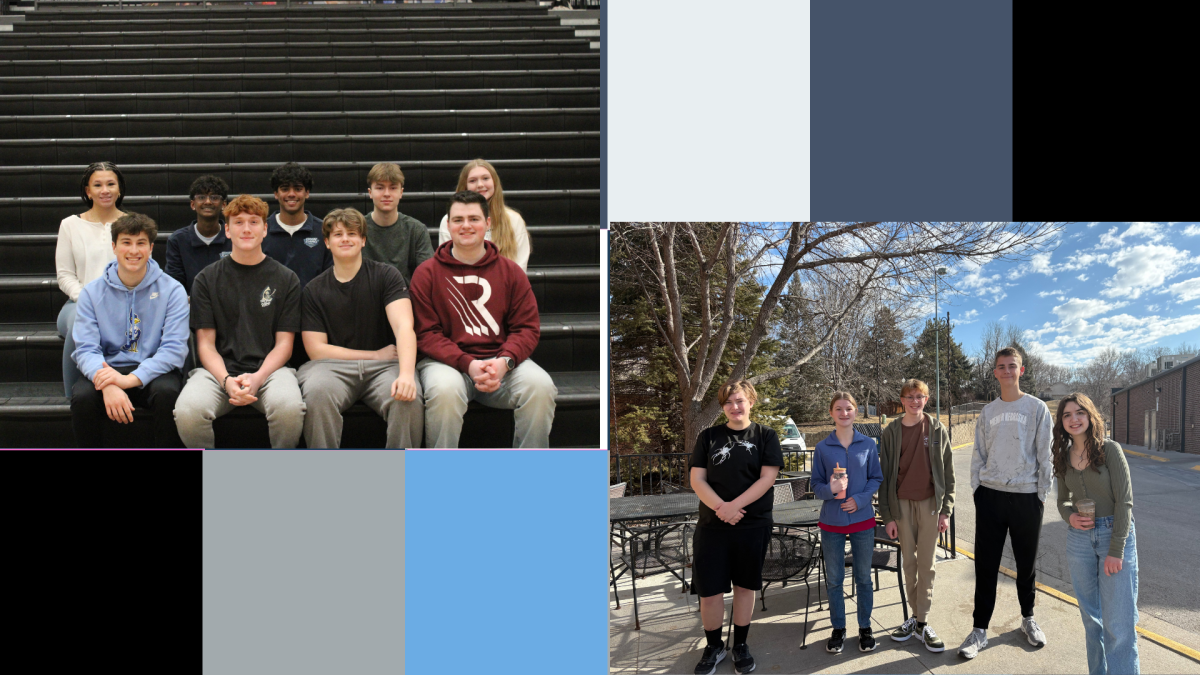
After filling out the proper paperwork, conversing with the proper authorities, and marketing their respective clubs, the Elkhorn North Chapters of Turning Point USA (TPUSA) and the Young Democratic Socialists of America (YDSA) were born. Founded in 2024, senior Reed Heaton hoped that the work he was doing within the Omaha chapter of the Democratic Socialists of America would spill over to the school and create actionable change.
“Our club [YDSA] focuses on building power within the working class and [creating] youth movements that [lead] to institutional change, like with minimum wage or supporting unions,” Heaton said.
Democratic socialists, according to Britannica, advocate for state regulation and welfare programs that mitigate the “harm of capitalism,” and reject communism as an admissible form of socialism. Not to be confused with social democrats, who believe in instantaneous change in the form of revolution or reform, whereas democratic socialists are in favor of incremental change. All socialists, however, are in favor of partial, state-sponsored ownership of the means of production–anything that generates profit.
Although membership in DSA is growing nationally, the Elkhorn North Chapter of YDSA has struggled to attract members. This is due, in part, to the optics of what it means to be a socialist. Because socialism is similar to communism, the two are often used interchangeably despite the stark differences in their definitions.
I sat down with Heaton to discuss what democratic socialism meant to him and several other members of the club. They discussed ways in which to engage the community and get their message across, upcoming protests and possible announcements, and the social and economic state of the country and the state of Nebraska. It was a small, organized discussion in the G100 pod which, from a distance, looked like a gathering of friends, not a club meeting.
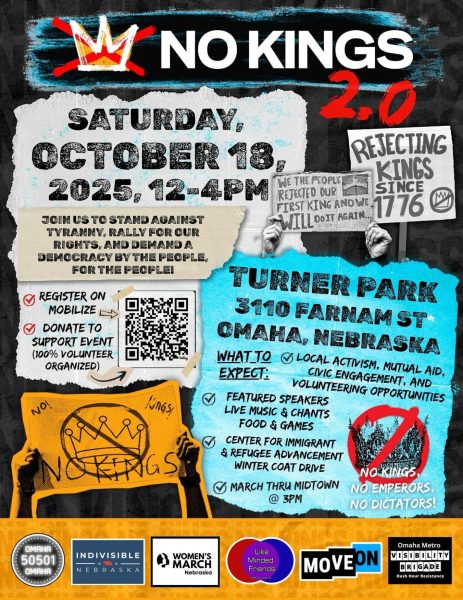
TPUSA is markedly different from DSA, however. From their website, “The organization’s mission is to identify, educate, train, and organize students to promote the principles of fiscal responsibility, free markets, and limited government.”
Sophomores Lincoln Petrick and Ellie Mehaffey contacted Turning Point USA because they were interested in starting a chapter.
“We are a non-partisan group…we don’t identify as Republican or Democrat,” Petrick said. “We go for conservative beliefs like free government or limited government, free market, and we support the Constitution.”
On the morning of Jan. 13, I attended TPUSA’s first meeting in order to get an honest feel of the club. It was a pleasant atmosphere, contrary to the hardline rhetoric I was expecting. We played a trivia game based on the constitution, then a Kahoot about the three branches of government (I won donuts for getting first place). Finally, Petrick and Ellie Maheffey led a prayer to conclude the meeting.
Belief-wise, this chapter aligns with Turning Point’s doctrine: conservative views, rule of law, the Constitution, and religion. Strikingly, however, Petrick hopes that this chapter of Turning Point “achieves connection,” which doesn’t coincide with Turning Points’ overall rhetoric or the group’s public image. I gathered that this chapter of TPUSA would be atypical in this sense, seeing as I felt welcomed and included at the meeting. The same can’t be said for the national organization
Courtesy of Turning Point USA
“Turning Point USA doesn’t work for any actual changes in society,” Heaton said about the difference between his club and TPUSA.
Naturally, TPUSA doesn’t “work for any actual changes in society” because the organization is rooted in American conservatism, an ideology rooted in tradition and history. It usually favors established institutions and a gradual approach to change.
The political spectrum contains a myriad of ideologies and worldviews. TPUSA and YDSA represent the broader ‘left’ and ‘right’ playing fields, and although they represent different worldviews, they are not monoliths.
The language and confidence provided by these organizations to discuss and encourage political participation is important, but blind subscription and unfettered devotion to these organizations, and political parties as a whole, isn’t any way to build a more perfect union.
Having the language and confidence to discuss their political views is important, but excluding compassion and intelligence, in lieu of ignorance and vapid superiority, from these discussions is dangerous and foolhardy. Whatever students identify with, it matters that they are becoming politically active and actively creating avenues to shape the world in the image of their beliefs.