

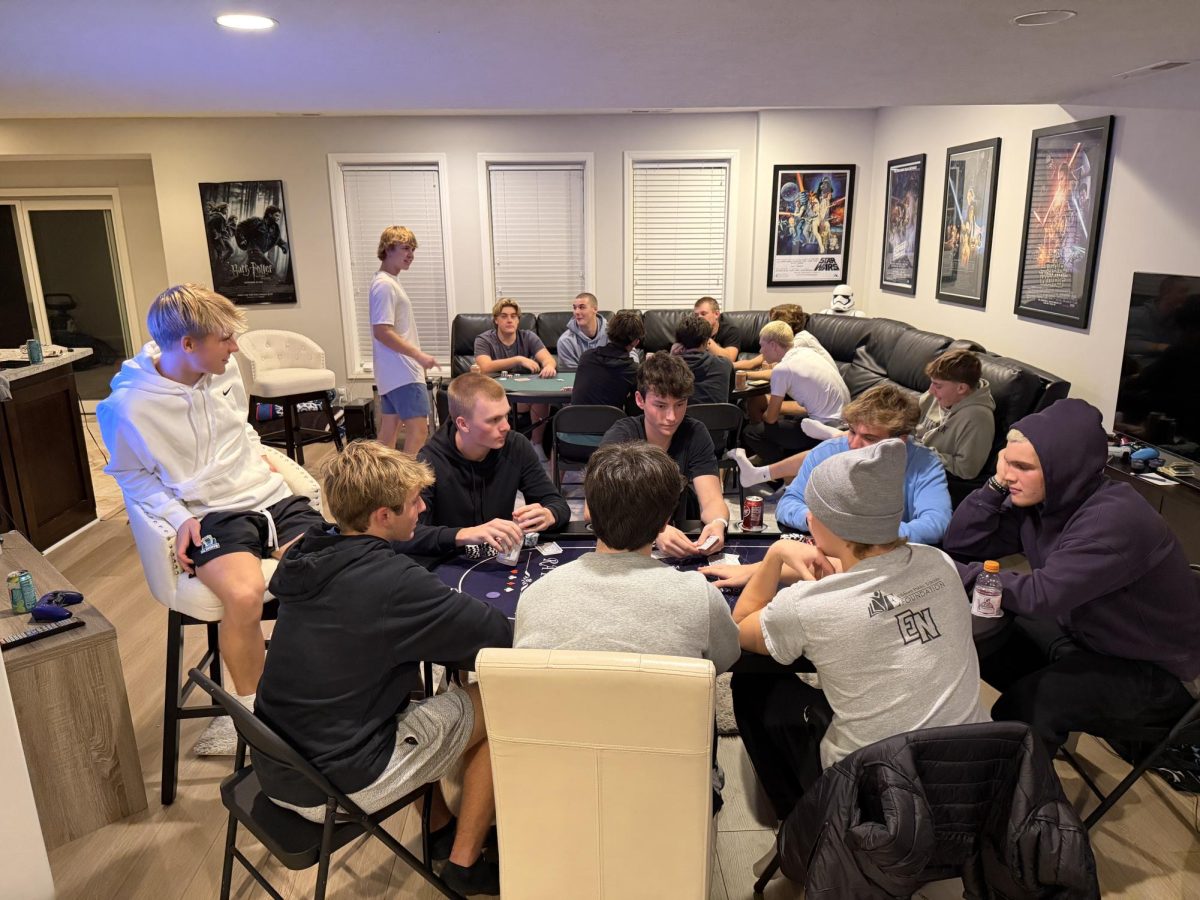
Whether it’s betting on a straight in Texas Holdem or on a touchdown in the Super Bowl, gambling has been a new addicting habit in teenagers’ lives. I first experienced gambling in my junior year of high school, playing poker with friends and making parlays, hoping to turn that $5 into $25. A parlay is a gambling wager that combines two or more individual “legs,” requiring every single selection to win for the bet to pay out. As you add more to the parlay, the payout increases offering higher rewards. Legs can consist of spreads, totals, money-lines, or player props.
Now teenagers losing money is more of a joke than super serious, most just laugh it off and hope they win the next one. But some will take it to heart and be upset that they lost money. When they win however, they will go tell friends how much and what hand they won off of. Also for most it is seen as a way to entertain themselves, not as a risk. For a lot of teens, gambling is like having another app on their phone.
“The access to gambling has only become easier and with high schoolers being young adults, their decision making is not quite there to make the best decision,” science teacher Dr. Dan Dischler said.
Teenage gambling is growing rapidly, with 60% – 80% of high schoolers reporting they have gambled for money in the past year. It starts off by accessing online sports betting and playing low stakes games with friends. With the legalization of sports betting in many states, it allows teenagers easy access. Even if it is illegal, many find ways to bypass the system to get into said gambling service. Casino games such as Blackjack, Baccarat, and roulette feel like mobile games normalized to play, they aren’t seen as money risks. The games act like any other mobile game on a device. Kids will get addicted to it and without realization they can end up losing money. Teens will continue to play those games because that’s what they enjoy doing, and they find it as a hobby.
One app that is free to download that serves as a “gateway drug” is Fliff. Fliff gives a free dollar every day for the user to bet on sports or play casino games. This dollar can be turned into $10 or back down, but it makes the user feel like they are playing with fake money because they put nothing into it. This drags the better to keep placing bets. Eventually they will want to win real money and move on from Fliff. Fliff also doesn’t ask for identification of age, until the user wants to cash out their earnings.
One reason the popularity of gambling has grown so much is because of social media advertisements. Teens see these ads on Snapchat, Instagram, Twitter, and TikTok of promotions of these betting apps. Even while watching a sports broadcast, the odds of seeing a promotion for a sports gambling site are extremely high. According to “Science Direct”, Nineteen percent of advertisements promoted gambling, with online casinos being by far the most common type of gambling exposed. There are constant ads on the platforms where sports betting takes place such as PrizePicks and Underdog.The companies make it seem like users have a better chance of winning, but in reality, they only make the odds look slightly better than before. PrizePicks does this on Tuesday where their whole deal is Taco Tuesday which picks three different player props and lowers the normal prop that was set.
“Some apps use things such as promos which give me special deals on player picks,” senior Jake Jansen said. “That’s what makes me keep coming back to place bets because all the deals help me win more money”.
Additionally, a study from “The Today Show” found that 60 percent of 11 to 17 year olds are seeing ads for gambling on YouTube and social media, pushed to them in their feeds. Social media influencers such as Drake, Kylie Jenner, and many more, also promote it as they even have specific accounts made for sports betting. The influencers use their page to post parlays for sports on collegiate and professional levels. They make it look exciting by using high energy and persuasive words, such as “easiest lock” or “I’ve never seen a slate open this soft”.
Additionally, sports betting can get people engaged, making it easier to place bets and cheer for their parlay’s to hit. It makes the games feel more intense, as the users need certain players to get certain amounts of points or rebounds. Friends can compare picks and odds banking on the same player to hit.
This aspect of gambling makes it seem like a social event, not just personal. Outside of the sports world, just playing poker can draw friends together. A single bad hand can turn friendly bantering to silence when someone loses more than they meant to. But when the bet rises and more money enters the pot the mood becomes tense. Some have fun and aren’t affected by losses, while others will take it to heart and be upset the whole night. Teens won’t realize how much they are up or down until they have run out of money or the game has ended. They keep playing for the fun of the game, for the adrenaline rush or the high stakes at risk.
As it becomes more and more popular among teenagers it is more prevalent and normalized across high schools in America. Teens find ways to access websites or apps, where they gamble without any thought. It is a cycle that never stops.
“Money goes up, money goes down, but the thrill lives forever,” senior Cole Hanigan said.