

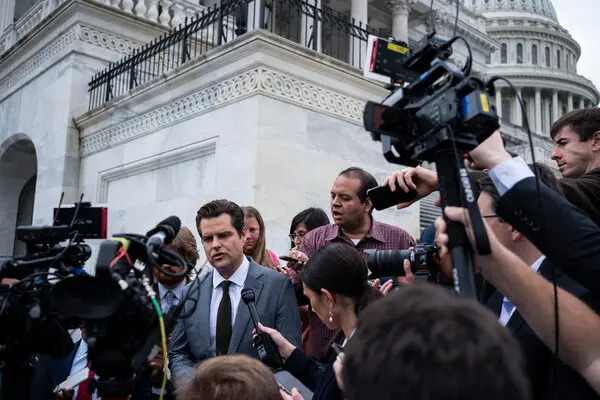
In the midnight hours of Sept. 30, the U.S. government officially shut down for the first time since December 2018, which means non-essential government services are halted. In 2018, it lasted a staggering 35 days and went down as the longest shutdown in over 40 years. Those weeks of suspended government action cost the nation over $3 billion in lost GDP.
The current shutdown resulted from unresolved disputes between Republicans and Democrats over national budget conflicts needed to finance government agencies. Democrats are fighting for an expansion of insurance related to the Affordable Care Act, which would reduce out-of-pocket costs of healthcare for United States citizens near the poverty line. Republicans disagree with the idea and believe that it should be handled when the next set of government funds is appropriated.
These disputes needed to be passed by the start of October to avoid the first shutdown in nearly five years. Even with a Republican majority in Congress, they were still short of the 60 votes needed to pass the bill in the Senate.
“It’s all about compromise,” former civics teacher Teresa Vann said. “That’s the whole idea behind our government, but right now they don’t want to. Most of the Democrats are firm against the budget passing.”
Results of the shutdown within the government vary. Key government jobs are required to show up, sometimes uncompensated. These jobs, such as TSA, air traffic control, emergency medicine, law enforcement, and national security, continue their operations as usual, with some forced to work without pay. In previous cases, this led to worker strikes.
“The TSA, military, and airline workers are all supposed to show up to work,” Vann said. “But these people don’t know when they’re going to get a paycheck.”
Non-essential government roles are suspended during the shutdown, and many are left without pay. Programs like the Environmental Protection Agency will stop inspecting water facilities, housing and agriculture agencies will stop insuring or dispersing new loans, and the CDC and the Institute of Health are expected to temporarily cut down on workers to save money.
In order for the shutdown to end, a bill must be agreed upon and approved by the House of Representatives, the Senate, and finalized by President Trump. Fortunately, everyday life will remain largely unchanged as our government fights for an agreeable compromise.