

Throughout the past few years dual enrollment has increased in the Elkhorn Public Schools District. More teachers in the district offer this useful tool for students to earn credits for college.
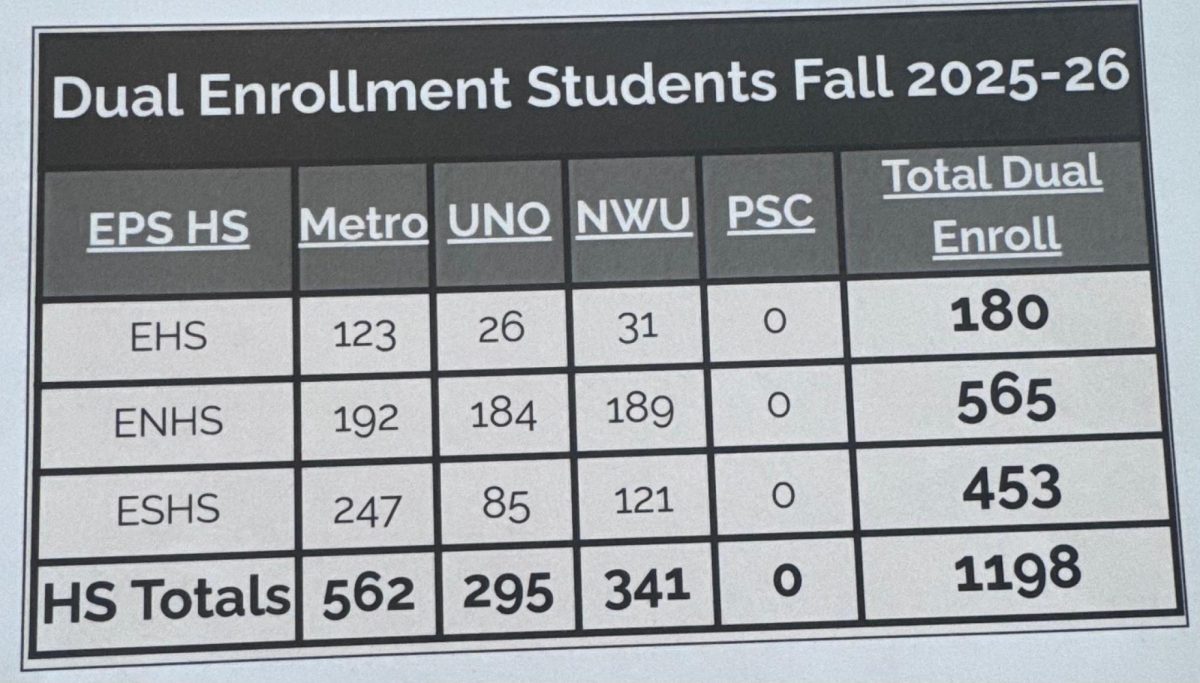
At Elkhorn North the number of dual enrolled students has nearly doubled. During the 2024-2025 school year there were 253 students enrolled in a dual enrollment program, and this year, 2025-2026, there are 545 students who are dual enrolled.
Dual enrollment lets high school students earn both high school and college credit simultaneously for little cost. This can give students a jump on college courses and build college readiness skills. These courses can be taught at the high school by approved dual enrollment teachers or they can be taken at a local college, often focusing on general education. The college credits that the students receive can give them a head start on degrees, save money on tuition, and possibly reduce the number of courses needed in college by earning transferable credits for general education or career skills.
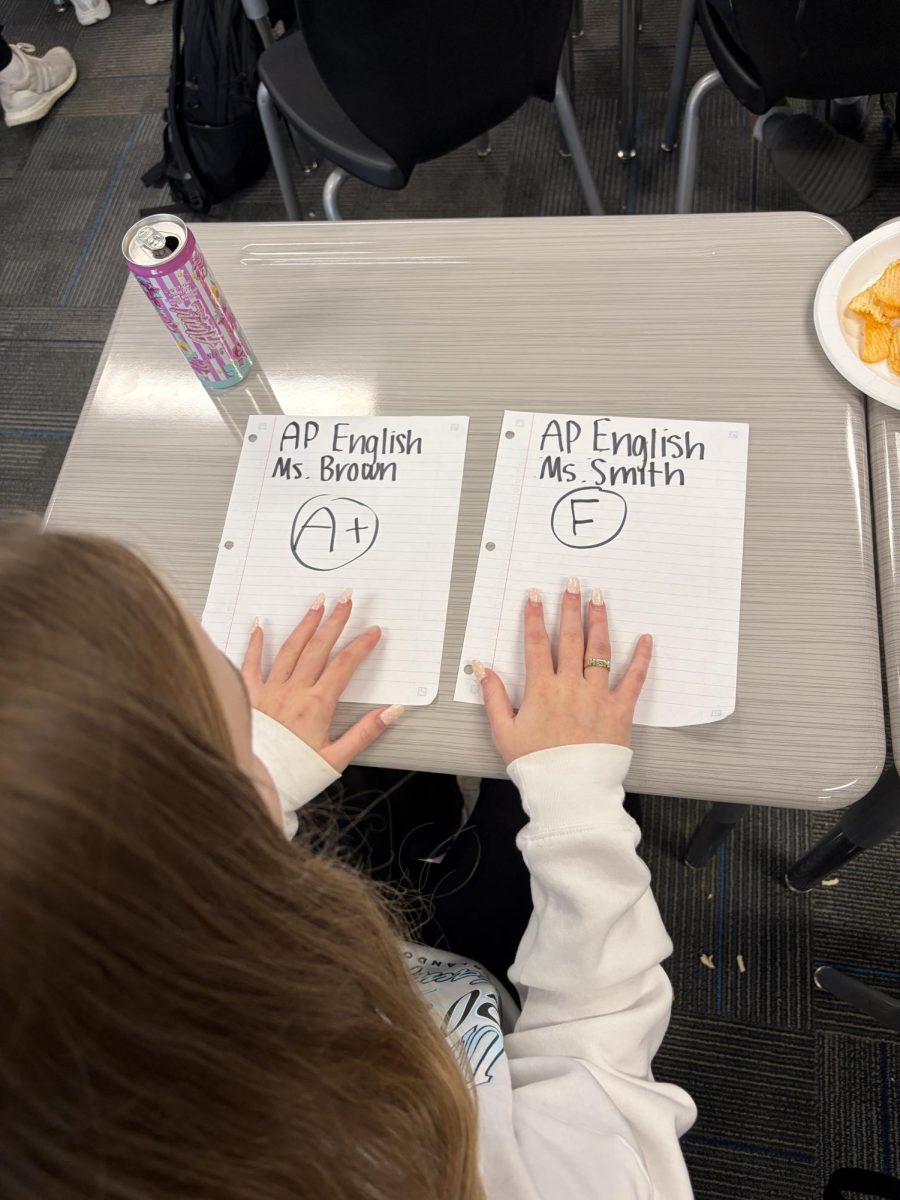
Students across Elkhorn are able to get this head start through luck of what teacher the student gets. For example, if two students are taking the same class different teachers, but only one offers dual enrollment, then only one of the students gets the credit. The only way a student can access dual enrollment is if the teacher has met the requirements to teach a dual enrollment program which include: partnering with a local college, meeting strict credential requirements, applying through the dual enrollment office, submitting documentation, and getting approved to teach college-level content. These rigorous requirements are not set by Elkhorn Public Schools but by the Higher Education Commission. This commission says if a teacher is not highly qualified with a masters degree in the area you are teaching, plus have 18 hours of teaching in that area, they can’t teach dual enrollment. This means individual teachers have to commit to go back to school for a Masters. This costs teachers more money out of their own pockets which can be hard to navigate and financially secure.
Another stipulation on dual enrollment classes is that most of these classes come from Advanced Placement. This means that only “higher leveled” students have the opportunity to enroll. These students get the advantage of earning college credit, while the “standard” and “lower leveled” students work just as hard but do not have the option to earn dual enrollment credits.
“The opportunity to dual enroll might encourage students to take a higher level course,” said senior Mason Mercer. “If of course their teacher offers dual credit.”
Out of the 24 classes in the district that offer dual enrollment, 16 of them are AP classes and the eight others are language, math, and Intro to Education classes. Between these 24 classes there are 1,198 students that are enrolled through these college courses, out of the 3,434 high school students in the Elkhorn Public Schools District. Less than half of the high school student body are able to get the opportunity to dual enroll and earn college credits.
“We’re continuing to have relationships with Metro Community College and expanding our offering in dual enrollment,” ENHS Principal Dan Radicia said. “We’re just not jumping all at once.”
Right now EPS is approximately one year away from conversations about senior composition and literature with Metro for dual enrollment. The plan is to keep going and offer additional dual enrollment opportunities for students. According to Radicia, each department has a renewal period every seven years. For example, the English department is looking at this process and will hopefully be coming to the point of aligning with Metro Community College to offer more senior classes as dual enrollment.
Elkhorn has the resources to provide dual enrollment to all high school classes in the district and by doing so they would give every student an equal chance to succeed and have a head start for college. The credits earned benefit the students tremendously by saving money and not having to take certain courses in college.
As the district continues discussions internally and with local universities, students hope that dual enrollment will become more accessible to a wider range of learners in the future years.
“I wanted to take a dual enrollment class, but most of the options were AP classes, and my AP class did not offer it,” senior Marlie Spethman said. “It wasn’t that I didn’t want the challenge, it just wasn’t an option for me.”