

Rage baiting has been around since 2002. The term was first used on an online app, Usenet, but now it is classified as brain rot. As the word has spread around the internet , it has entered people’s daily vocabulary.
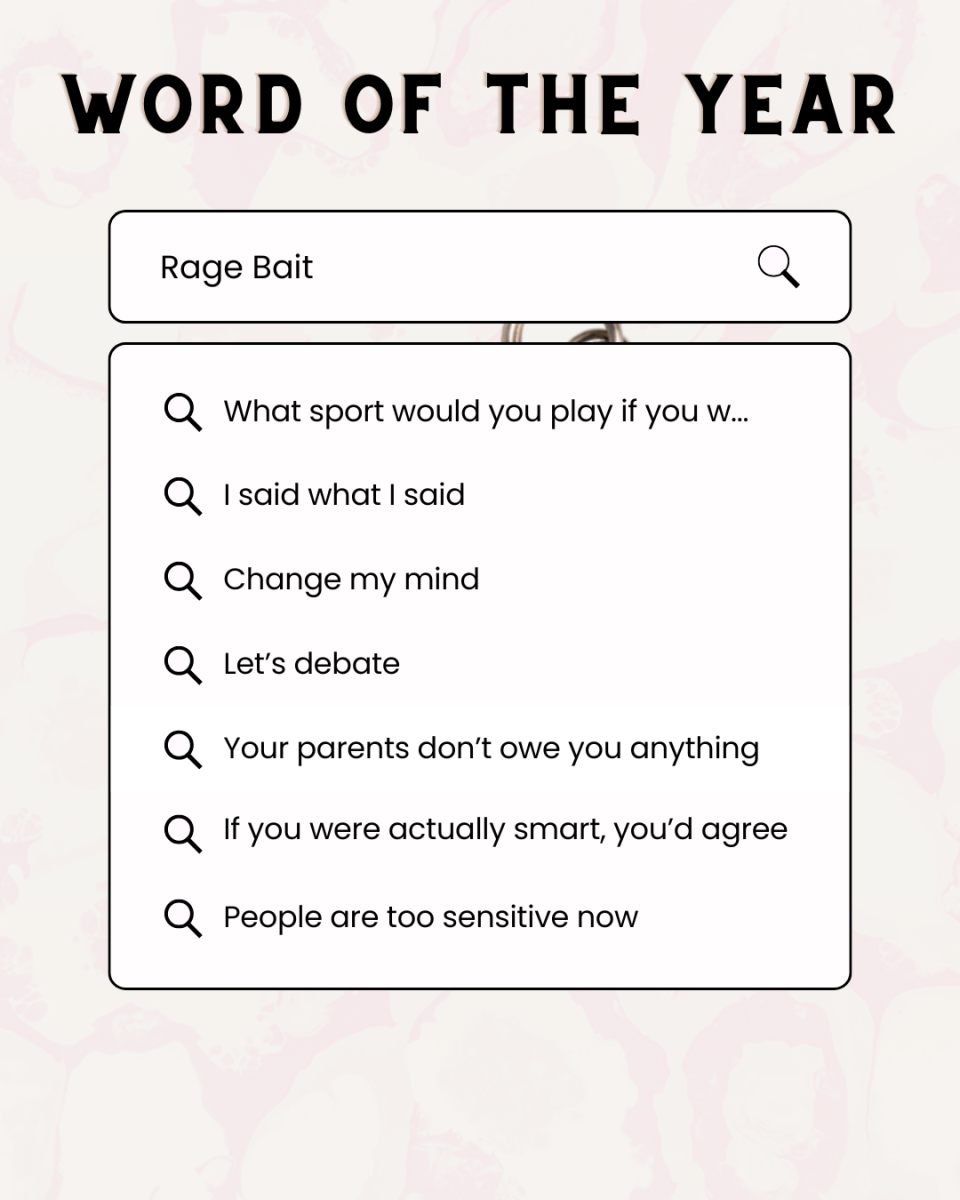
Rage bait has grown online and become a common practice among teenagers in everyday life, so it is no surprise that it was awarded “Word of the Year” by Oxford University Press. They define it as “Online content deliberately designed to elicit anger or outrage by being frustrating, provocative, or offensive.”
In simpler terms, it is the act of confidently expressing false information to get angry reactions.
“I rage bait my girlfriend all of the time,” senior Tylo Cook said. “I enjoy ragebaiting her; it’s super funny.”
Social media users often post intentionally bad takes on various topics: fitness, school, sports, race, and pop culture. The creators are not focused on being right; they are trying to provoke the audience for attention, leading comments and reacting to the video, ultimately boosting their video views.
For example, former streamer and now TikToker Natalie Reynolds has 4.4 million followers. She posts controversial videos of mocking and copying other creators, pretending to be on house arrest, and dresses nonsensically to gain more comments. This leads to long, argumentative comment threads that boost her views.
“I rage bait my friends and family all the time, for no reason at all,” senior Aubrey Bannister said. “It makes people laugh, but I mainly do it to annoy them.”